
物体認識
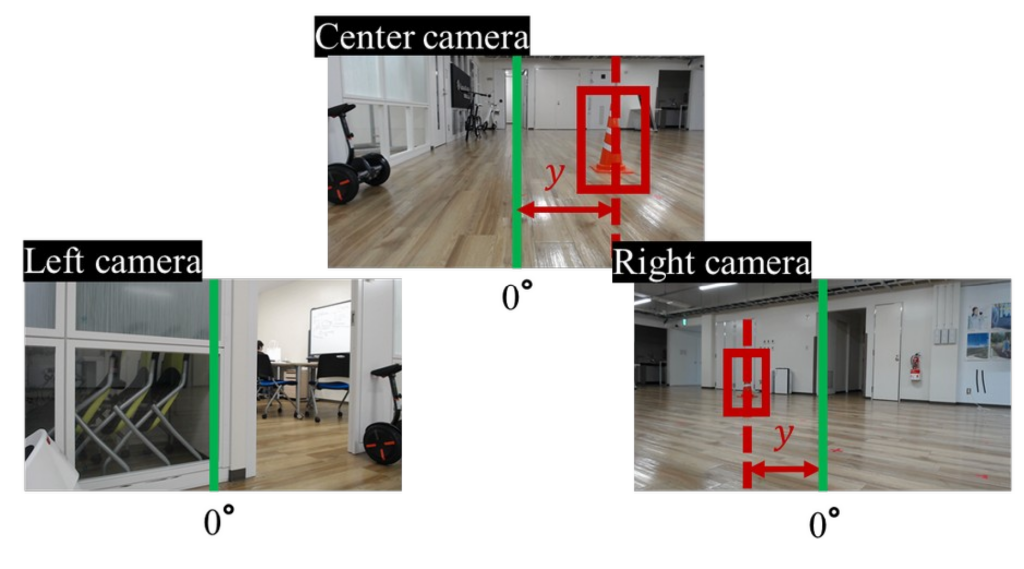
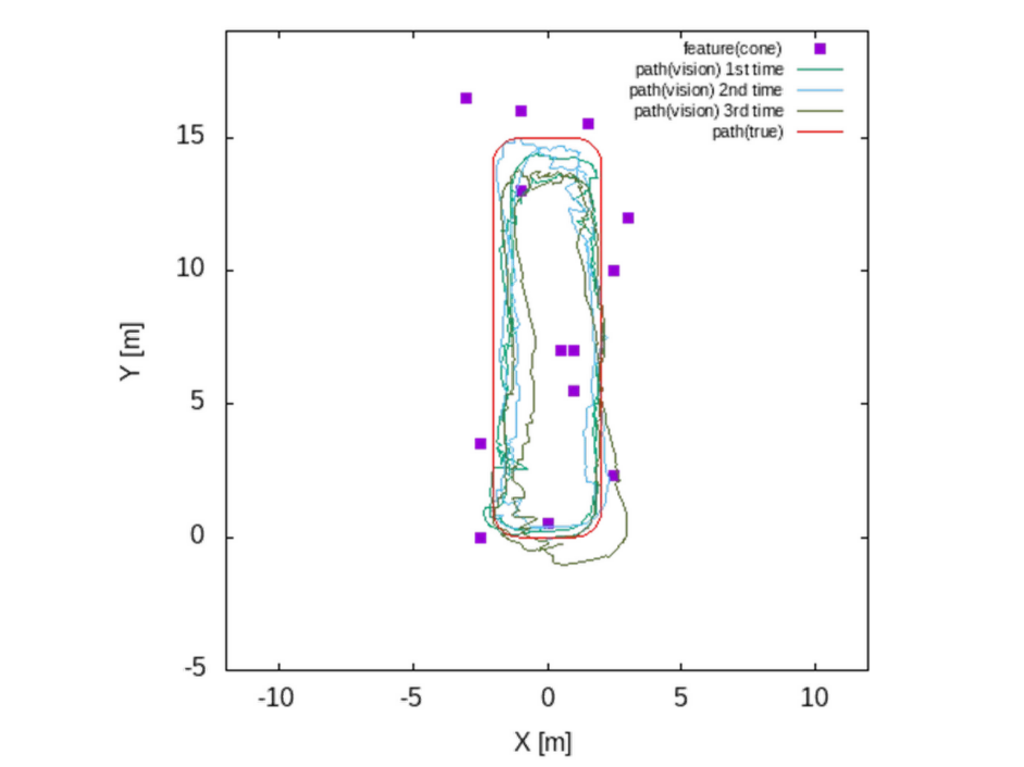
物体認識の進歩を利用して,ロボットの自己位置推定に,物体認識アルゴリズムを実行するカメラと環境地図(フロアマップなど)を使用することが可能である.少ない物体数でも自律航行に十分な精度が得られることを示す.
Taking advantage of advances in object recognition, it is possible to use general objects as landmarks to estimate the robot’s self-position. The results show that sufficient accuracy for autonomous navigation can be achieved even with a small number of objects.
セマンティック セグメンテーション
セマンティック セグメンテーション(画像をピクセル単位での分類) を使用することで、特定の地形のみを通過するようにトレーニングできるインテリジェント ナビゲーション システムを構築できます。 当ロボットはキャンパス内の道路のみを使用し、草地や潜在的な障害物を避けるように訓練されています。
By using semantic segmentation (classifying images pixel by pixel), you can build intelligent navigation systems that can be trained to traverse only specific terrain. Our robots are trained to use only campus roads and avoid grassy areas and potential obstacles.
確率的機械学習
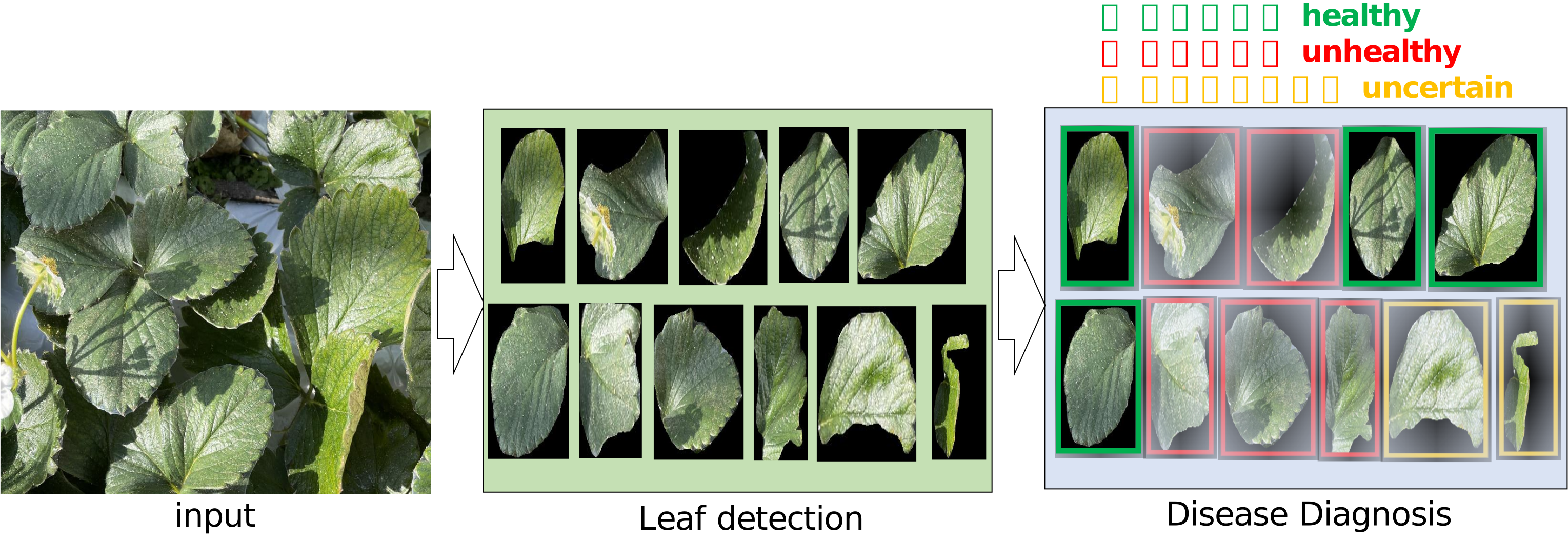
病害虫の防除や病害対策は重要な農作業の1つである.データセットが小さいため,このタスクは機械学習にとって困難です.このプロジェクトでは,小規模なデータセットでトレーニングでき,さらに診断の信頼度を提供できるBayesian CNN (確率的機械学習モデル) を使用しました.これにより,信頼性の高い診断が可能になります.
The control of pests and diseases is one of the most important tasks. Due to small datasets, this task is challenging for machine learning. In this project we used Bayesian CNNs (probabilistic machine learning model) which can be trained with small datasets and furthermore can provide a confidence level for diagnosis, which enables reliable diagnosis.